Monday, November 28, 2011

Korg "Where's the portamento?" ad, Contemporary Keyboard 1978


Korg "Where's the portamento?" 1-page advertisement from page 25 in Contemporary Keyboard March 1978.

Happy Movember, people!   :)

Do you know hard it was to try and line up this ad featuring Kerry Livgren of Kansas sportin' a kick-ass 'stache so it would  fall on the last blog post in November?   Best thing about that moustache? It has aged like good wine!

When this ad appeared in the March '78 issue of CK, across the pond, UK readers were opening up their March issue of International Musician to find that two-page "Seven hundred and fifty words..." ad I had just blogged about. Although the two appeared at approximately the same time, they couldn't have been more different from each other.

While Korg/Rose-Morris/Hohner were trying a little too desperately to take on the role of "expert" by using valuable advertising space to "educate" UK readers on the basics of sound, Korg/Unicord featured well-known musician Kerry Livgren to help promote Korg synthesizers in the US.

The largest of three photos in that 2-page UK ad? A kid playing a penny whistle. Meanwhile the US ad featured - unsurprisingly - a large photo of Kery Livgren playing a Korg PLS-series synthesizer that also featured a large KORG logo strategically placed in the centre of the instrument in the photo.

Do I need to go on? Needless to say, I'd bet that US ad was probably a lot more effective at both getting readers attention and keeping it.

To be fair - that UK ad was trying to push a lot more instruments in the two-page spread. The 1-page US ad was focusing mostly on Korg's Professional Laboratory Systems (PLS) line of synthesizers. Although, interestingly, the actual models of these synthesizers - the 3300 and 3100 (and possibly the 3200) - are not mentioned directly.

Mistake or not - this wasn't the first kick at the can to get the actual names of the synths in a PLS ad. The first Korg PLS ad that started to appear in CK in October 1977  also didn't mention the synth model numbers.


I find that odd - but, then again, the March UK ad doesn't mention the PLS synthesizers at all. Nothing. 

This ad also introduced US reader to the new Micro-Preset synthesizer by Korg - and mentioned that at the time there were 10 products in the Korg product line. My guess is these would include the Maxi-Korg (aka 800dv), 700s, Preset, 770, Synthebass, Ensemble P (aka Poly Ensemble 1000) and Ensemble S (aka Poly Ensemble 2000), Micro-Preset, 3100 and 3200.

US readers could consider themselves even more lucky - because it wasn't just in ads that readers could find info on the PS-series synths. Well before this ad or even the first PLS ad ran in CK, the July/August 1977 issue of Synapse featured a small promo for the two synths in the "What's Happening" section on page 40 that included a lot of good reference material like list prices.
"Two new polyphonic synthesizers have been released by Unicord Inc. The Korg PS3100 is a fully polyphonic synthesizer in which each note has it's own VCF and VCA. Six waveforms are available from the Modulation Generator and a Polyphonic Same and Hold is also featured. Unlike most polyphonic synthesizers, patching is allowed on the face panel. The PS3100 lists for $2995. The Korg PS3300 is a modular polyphonic system composed of three PSU-482 modules featuring signal processors, low pass filters, envelope modifiers, resonators, amplitude modulator, and two modulation generators. The PSU-483 module features mixer with VCA, sample and hold, envelope generator and voltage processors. As with the PS3100, patching is allowed and many inter-connections are possible between the two systems. The PS3300 lists for $7500 with remote keyboard"
Contemporary Keyboard also included a Spec Sheet promo on the PS3100 in the December 1977 issue (why not include the PS3300?!) that also included some good reference info:
"Korg Polyphonic Synthesizer. Capable of producing separate envelopes for each of its 48 notes, the PS 3100 polyphonic synthesizer is modular in construction. Waveforms available are triangle, sawtooth, and pulse in four frequency ranges: 2', 4', 8' and 16'. An external pulse width modulation control input and a frequency modulation control input are supplied. Two modulation oscillators, a filter section, a polyphonic sample & hold, a voltage processor bank, and an envelope generator section are included on this unit. The 48-note eyboard features selectable single or multiple triggering. Unicord 75 Frost St, Westbury, NY 11590."
But don't fret - it would only be another four months before UK readers would get some news on the PS3100 and 3300 in another two-page Rose-Morris ad that ran in the July 1978 issue of IMRW.

That ad is on deck for the next blog post! :)

Long end note: If you recall the end of my last blog post, I pointed out there were three logos at the bottom of that ad and I was trying to find the connection between them - Korg, Rose-Morris and Hohner. I knew Rose-Morris was a distributor of Korg, but what was Hohner doing in there? Turns out I found the answer quite by accident in a Korg WT-10A tuner ad that also appeared in that March 1978 (UK) issue of International Musician and Recording World on page 202.

A lot of ads in this UK magazine were actually paid for by the distributors of the products - unlike in the US where most synth ads seemed to have come directly from the companies themselves. Early on, Korg tended to let their distributors do the talking. Like for these Contemporary Keyboard ads from Unicord for the Polyphonic Ensembles and MaxiKorg. In the UK, I knew that Rose-Morris was often responsible for the Korg ads that appeared in IMRW.

In the case of that Korg WT-10A tuner ad I mentioned above, Korg looks to have paid for the ad because at the bottom it includes a list of all of their distributors - I doubt a distributor would include their competition in their own ads. These include CBS Musical Instruments in Australia, Erikson Music in Canada and Unicord in the US. But in the UK it looks like they have TWO distributors - Rose-Morris and M. Hohner!


So, here I was coming down hard on Rose-Morris for that two-pager, when in fact, it looks more likely that Korg probably paid for the ad themselves, and included *both* of their UK distributors logos - Rose-Morris and Hohner logos.

The other explanation is that Hohner and Rose-Morris paid for the ad together (again - can't see this happening).

Either way - my apologies to Rose-Morris! My frustration should have been distributed equally to Rose and Hohner - or to Korg itself.   :)

Thursday, November 24, 2011

Korg "Seven hundred and fifty words..." family ad, International Musician 1978


Korg "Seven hundred and fifty words..." 2-page family advertisement including 800 DV synthesizer, 700s synthesizer, Preset synthesizer, 770 synthesizer, Synthebass, Polyphonic Ensemble 1000 and Polyphonic Ensemble "Orchestra" 2000 from page 20 and 21 in International Musician and Recording World (UK) March 1978.

From the moment I read the title, this ad made me a little bit annoyed. Mostly because I didn't know what "flannelled" meant.

Let me save you the trouble: "Flattery or meaningless talk intended to hide one's ignorance or true intentions."

Okay. I keep reading....

Still annoyed. Mostly because once I found out what "flannelled" meant, I then found it ironic that most of the "750 words of fact" was doing exactly that - trying to hide Korg... er... Rose-Morris' true intentions - to sell instruments. But that's not so bad. That's what ads are supposed to do - sell instruments. I'm angry they were doing it so badly.

I get it. They were trying to play "educator" with readers. Make 'em feel like they are the experts by laying down some basic facts about sound, how it's produced and how heat affects tuning. Get all altruistic on 'em. But unfortunately it's written... it's written... well... it's written like *I* wrote it. Lot's of sentences that start with "And", "But", and "Because". More of a conversational or advertorial-like tone. Bad news is - I'm not so good a writer. I write at about a grade-two level with an even more limited vocabulary.  That's why I'm not a featured writer for Wired (Two words: dream job).

And what do you get when you try and cover up a bad sell job by hiding it behind 750 words of "facts" using grade-two level conversational writing - all written in a font size more at home in the Mr. Men/Little Miss book series? In my opinion - epic fail. It can almost be insulting to the reader. At the least it is confusing, and the end result is a two-page spread that actually provides very little value.

We, my friends, are the ones getting "flannelled". 

In fact, it's really only that second page that provides any real value. Could you imagine what an effective ad this would have been if the title had been "Two hundred and fifty words of fact about Korg synthesizers for the keyboard player who's tired of being flannelled". And then just included nice sized photos along with the basic facts about each of the seven instruments in a half-decent sized font.

Instead, the actual information on the instruments is squished into the far right of that second page in a font only an ant could read, with only a photo of a Polyphonic Ensemble and a Mini-Korg 700s.

Finally - those logos in the bottom right corner. I figured out the Rose-Morris connection with Korg - and will report on that in my next blog post, but what is with that Hohner logo sitting there too? I'm only starting to piece together that connection... but it is just too dang warm out. Unusually warm. And it won't stay that way for long.

So, logo connections will have to wait. Time to throw a snowball before it all melts.  :)

End note: Please note I'm not annoyed at the word "flannelled" - just that I didn't know what it meant. In fact, I think that word needs to make a come back with today's kids. Maybe get it positioned with the Occupy movement or something. Or slip it in with that Internet cat meme.

Monday, November 21, 2011

Korg Polyphonic Ensembles S and P "Most realistic sound under the thumb" ad, Contemporary Keyboard 1977


Korg Polyphonic Ensembles S and P "Most realistic sound under the thumb" 2/3-page advertisement from page 43 in Contemporary Keyboard July 1977.

I've been on a Korg kick for the last few posts with the DL-50 Delta and the Korg accessories posts. And while doing a bit of research I was flipping through older issues of CK when this ad caught my eye.

Does it look familiar? Then you have apparently become a bit of a Unicord ad fanatic. And you probably appreciate the lengths to which Unicord went to make sure that they kept some level of consistency with their early CK ad.

Six months before this ad appeared, Unicord included this 2/3-page Maxi-Korg K-3 advertisement in the January issue.


The latest Polyphonic Ensembles ad is different enough that even if the reader remembered the first Unicord ad from six months ago, he or she wouldn't have ignored it figuring it was the same ad. But its a great next iteration of that earlier ad with a number of similarities.

The repeating white "Korg" background with one grey stand-out immediately catches the eye - especially when you consider that this 2/3 ad runs next to a single column of text. The reworked pattern design works perfectly with the addition of an extra photo for the second instrument, and the additional ad-copy required.

The ad-title is also located in a similar position to the first ad, and although the "realistic sound under the thumb" is unmemorable and sounds awkward to me, I get what they are trying to say - "under your control". Ad-copy is similarly unmemorable, but provide a good overview of the two instruments, highlighting certain features of each.

The logo section, on the other hand, makes me extremely happy when compared to the earlier ad. The new ad got rid of that third level of corporate self-absorbed BS by removing the confusing "Gulf + Western Manufacturing Company" logo and tagline, and replaced it with a larger "Unicord, Inc" mark, as well as giving us Canadian readers a bit of acknowledgement by including "Sold in Canada by Erikson Music Ltd., Montreal".

The two ads have something else in common too. The Korg instruments they promote were given different names in North American and across the pond in the UK.

In the case of the Maxi-Korg ad, the instrument was also known as the Univox K-3 around these parts - or, as I eventually decided to call it - the 'Univox Korg Maxi-Korg K-3 distributed by Unicord', but in UK ads it was referred to as simly the 800 DV. Definitely not as cool a name - or logo if you look closely at the Maxi-Korg photo in the earlier ad. Very retro.

In the case of the Polyphonic "P" and Polyphonic "S", apparently they were also known as Univox K4 and K5, and early UK ads in International Musician referred to them as the Polyphonic Ensemble 1000 and Polyphonic Ensemble "Orchestra" 2000, later simplified to the Poly 1000 and Poly 2000. More on those UK ads in the very near future.

Finally, you will notice that the scan I posted is kind of unbalanced, with a lot of dead space on the right hand side of the page. I just wanted to point out how much I hate when there is too much space between the ad border and the edge of the page. Gah! That bugs me. :)

Anyways, readers of Contemporary Keyboard would have run into a "teaser" for the two machines four months earlier when a few of the features popped up in the Spec Sheet section of the March 1977 issue.
"Korg Polyphonic Ensembles. Two new polyphonic keyboard instruments from Unicord are the Ensemble P and Ensemble S. The Model P incorporates presets of known percussive instruments such as acoustic and electric piano, clavichord, and so on. All preset selections are colored by the use of a high- and low-pass filter bank that can be remote-controlled with a foot pedal. An ADS envelope generator is provided, and a waveform selector supplies a variety of tonal effects. The Model S has preset sounds of pipe organ chorus, brass, and strings. A high- and low-ass filter bank and an AS envelope generator are supplied. Unicord, 75 Frost St. Westbury, NY 11590.
I also found a review of the "PE 2000" in an issue of International Musician that I plan to read over in the next couple of days and if I find any interesting points I'll be sure to pull 'em into a blog post. 

Thankfully today, it is much easier to find information on these two beasts online. For example, the most excellent Korg 40th anniversary article in Sound On Sound titled "40 Years Of Korg Gear: The History Of Korg - Part 1" included two paragraphs on the machines.
"The PE1000 was, in essence, a 61-note electronic piano with seven voices differentiated by preset values of the Traveler and envelope. Some control was available, but with a single oscillator per note, no touch-sensitivity, and just a single filter and envelope for the whole keyboard, it was very limited. Nonetheless, the PE1000 was soon to be seen in some respected company; Vangelis used one, as did Jean-Michel Jarre.

The 48-note PE2000 was a traditional string synth, with a richer sound produced by eight organ, brass, chorus and string presets. With a claimed three oscillators per note (or, more likely, three delayed and detuned versions of a single oscillator) and an integral phaser, it soon made friends among the keyboard cognoscenti of the day, including Tangerine Dream, Jean-Michel Jarre, and Hawkwind."
The article goes on to state that Korg President Keio promoted the two as a pair since the sounds they created complimented each other - one for percussive (hence the "P") sounds the other for sustained ("S") sounds. The chosen names of the instruments in the UK (1000 and 2000) don't really explain this aspect very well. And over in North America where the names "P" and "S" are a little more explanatory, I still find it surprising that the ad or the Spec Sheet don't explain the "P" and "S" labels more clearly. Maybe its just me that didn't get the association at first. That wouldn't surprise me.

Till Kopper also has a page dedicated to each instrument on his Web site. Both the Polyphonic Ensemble 1000 and Polyphonic Ensemble 2000 pages include reference information, specs and sound examples, as well as great photos - outside and inside the instrument. 

A lot more images and info are available in Google searches - MATRIXSYNTH in particular has some great auction photos. Definitely check 'em out.

The two instruments were promoted a lot more in the UK around this time period and I have a few great ad scans coming up in the next couple of posts. Stay tuned!

Thursday, November 17, 2011

Korg Accessories "Do you feel locked in" ad including MS-02, MS-03, MS-01, SQ-10, MS-50, PCK-1 & 2, Keyboard 1980


Korg Accessories "Do you feel locked in" 1/2-page advertisement including MS-02 Universal Interface, MS-03 Signal Processor, MS-01 Foot Controller, SQ-10 Analog Sequencer, MS-50 Monophonic Synthesizer, and PCK-1 and PCK-2 Synthesizer Patch Cord Sets from page 8 in Keyboard Magazine February 1980.

Putting the design aspects of this ad aside for a second, I gotta say this has always been a stand-out ad for me. From a gear-freak perspective it puts some of the Korg pieces I've always craved to play with into a very small space. From the perspective of my appreciation of their marketing strategy, the first sentence of the ad-copy sums up Unicord/Korg's positioning of all this gear in the market:
"Do you feel locked-in because you can't expand outside your synthesizer brand?"
Synthesizer companies, including Korg, had spent years developing their own proprietary technologies, and on purpose or not, "locked-in" their users by implementing their own controls. It wasn't a perfectly walled garden, but it did a pretty effective job at keeping owners from buying outside their brand. Until quite recently (relative to the appearance of this ad), most consumers were only buying one or two synthesizers due to their high costs, and it was a lot easier to sell the consumer the second instrument if all those other synthesizers and sequencers from other companies weren't compatible with that first one they bought.

But, as prices for synthesizers dropped and synth stacks grew, demand also increased for gadgets that could link different brands of synths together. Korg acknowledged this situation and wanted to make sure they could accommodate these growing needs.

Unfortunately, due to the nature of the ad (I'll get to that in the second half of the blog post), not much could be said about each piece of equipment. But luckily two of the products made it into the Spec Sheet section of Keyboard Magazine two months earlier in the December 1979 issue.
"The MS-50 synthesizer expander module has a multi-mixable waveform VCO, VCF, two VCAs, a highpass filter, two envelope generators with normal and inverted outputs, an LFO, a variable voltage supply, a 3-channel amp, a signal inverter, a ring modulator, a sample-and-hold, a pink/white noise generator, waveform dividers, an envelope follower/trigger detector, an AC/DC meter, a manual triggering switch, a headphone amp, and multiples."

"The SQ-10 analog sequencer is a 3x12 sequencer with separate portamento controls for two of the outputs, linear and exponential clock speed inputs for step spacing variation, and remote start, stop, and step capabilities. the unit can be used to drive up to three separate synthesizers. Pirce is $500.00. Korg, 89 Frost St., Westbury, New York, 11590."
To find out more on the other pieces of gear, Google away. Lots of good info online - for example, this MS-02 page.

So, about the design of this ad....

Just as Korg was acknowledging that many musicians felt "locked-in" by their synthesizer brand, I'm sure the designer felt "locked-in" when someone broke the news to him that he was building the ad. I'm guessing that this is how the conversation went down*:


(* some kind of legal disclaimer: This is very likely NOT AT ALL how the conversation went down)

Creative director: Hey Bob, finally got all the pieces of that new Unicord ad for you.

Designer: Awesome. I'm a big fan of Korg gear.

CD: Okay. Great. First, here's five photos of  Korg gear Unicord wants to includ in the ad.

Designer: Wow - nice stuff. These will look great in a full page spread.

CD: Yah, about that. Since this is really just promoting Korg's line of accessories, they've decided to go with a half-pager.

Designer: Huh. * thinks a little bit * Okay, no problem. The photos will be a little dark when printed so small, but we can maximize each photo's size to fill the available space and can select a few accent colours to help balance everything out.

CD: Um... actually, it's a black and white ad. The budget was really slashed for this one since for the last two years Unicord has really been burning through cash placing multiple full-page advertisements in pretty much every issue of Keyboard -  the MS-10 and MS-20 synthesizer, Sigma synthesizer, Lambda Polyphonic Ensemble, and VC-10 vocoder. So, yah - this one is black and white only. Did I mention half-page?

Designer: * nods head *

CD: Great. Oh, and here is the ad-copy. I know it looks a little long at around 200 words, but you can fit all those words in around the images, can't you? Try using really compact letters.

Designer: They're called "fonts".

CD: What? Whatever. No one will ever have to know technical terms like "fonts". Hey - also, try using something fancy, like italics. Those always look good in ads.

Designer: Italics will make the words harder to read, especially in such a small forma...

CD: * interrupts * Whatever. Just do it. Oh, did I mention the VP of Marketing's son is taking "Space" in his grade two science class and it would be really great if you could include a large unnecessary photo of the Earth in the ad?

Designer: Ummm... *grabs sketch pad*   Here... kinda like this...?

CD: Yaaaaah... no... Could you put it right in the centre of the ad? Oooh, yeah, like that. Now make that Earth photo larger... laaaaarger.  You know, the photo of the Earth represents Korg's growth and world-wide presence. We're sending a message to the reader.

Designer: I got that. But it really takes up a lot of space that could be used to help layout all that content you just gave me.  And don't you think the three or four full-page Korg ads that have been appearing in each issue of Keyboard for the last two years has already given readers the impression that Korg is a world-wide company?

CD: *stares at designer in silence*

Designer: *stares back*

CD: So, you'll make that photo little larger?

Designer: *under his breath*   Fuck me.

Monday, November 14, 2011

Korg DL-50 "Delta Dawn" ad, Keyboard, 1980


Korg DL-50 "Delta Dawn" synthesizer 1-page advertisement from page 49 in  Keyboard Magazine February 1981.

It's Thursday November 10 as I begin writing this - the start of my extra-long weekend here in Canada since tomorrow (Friday) is the Remembrance Day holiday for most of the country. I took off the Thursday hoping to get a four-day holiday out of it and spend some time watching some quality movies I've been PVR-ing. But work keeps catching up to me, so instead of keeping this blog post short so I can hide out in bed watching some gratuitous violence, I'm keeping it short because I'm doing work stuff. Boo me.

This Korg Delta advertisement looks to have made its first appearance on the back-inside cover of the  December 1980 issue of Keyboard. It then appeared three more times in 1981 exactly four months apart starting in February, then June and finally October.

Why so much time between ad runs? Probably because Korg was on year three of their multi-advertisement blitz that started ramping up back in late 1978 with promotions for the MS-10 and MS-20 synthesizers and VC-10 vocoder. When this ad came into the rotation, Korg was also promoting the CX-3, ES-50 Lambda synthesizer and KR-55 drum machine. Korg was playing musical chairs with their ads - there were only so many they could have in one issue.

Besides the really clean layout of the front panel, one of the things I love most about the Delta is the name. I think the Delta was the third keyboard from Korg to use a cool symbol-like title - there was also the Sigma from back in 1979, and the Lambda that began its advertising in early 1980. I really dig cool names for synthesizers rather than just boring model numbers. Sure, some synths speak for themselves. But really... MS-10 - boring. KR-55 - blah. But Delta and Trident have a lot more pop to 'em. And if you look at today's synths, names like Virus, Mopho or Revolution are what catch my eye. Hee hee... especially Mopho.   :)

I have had no experience with the Delta. None. So, of course to learn a little bit more I turned to YouTube. One of the most watched demo videos is by YouTube user Abertronic, and it does a pretty good job at showing off the best of the Delta.


Another video that came up in a YouTube search was from Brainstormer2302. Looks like it was made as part of an eBay auction and not surprisingly has a bit more of a sell-job associated with it. But it is still an okay demo. There is a Part 2 as well.


But even in today's connected world of YouTube synth demos, I still find original synth reviews helpful to dig up and read through. The problem is that even when you considering the vast amounts of advertising Korg did in Keyboard during this time period, reviews of Korg instruments were quite rare. Luckily, a review of the Korg Delta was published in the December 1980 issue and looks to be only the second or third Korg review *ever*.

Domonic Milano introduced the two-page review by immediately setting expectations. He points out the low price and the Delta's limitations. I like my reviews honest and to the point.
"This month we'll be looking at the Korg Delta, a relatively low-cost keyboard ($1,160.00 list price) that offers both string machine and polyphonic synthesizer sounds. The Delta has some limitations - it's not one of those it'll-do-everything-and-the-laundry-too instruments - but it's not designed to compete in that market. It's designed to provide the player on a limited budget with a reasonably good string sound and some polyphonic synthesizer effects."
He then describes each of the sections separately - keyboard, joystick controller, tuning controls, synthesizer section, string section, output section and back panel - before ending on a high note by calling the machine versatile and useful, and he found that "you could get quite a few different effects and some real nice sounds out of the instrument". Domonic never let's ya down!

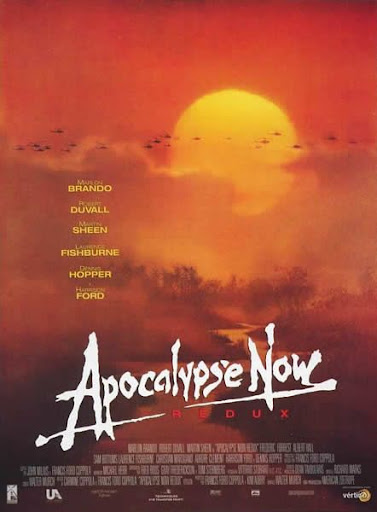
Before I end this post, I just have to point one thing out. I don't know about you but this ad really reminds me of an1980s action movies. I tried using Google Images to pin down some movie in particular, but just couldn't find anything similar to it. In fact, most of the action movies that even remotely look like this ad came out later in the 80s, so a connection with action movies was obviously not the designer's intent.

For example, Chuck Norris' 1986 movie Delta Force didn't look anything like it. And movies like Rambo II (go Rambo!) had orange cloud/smoke theme, but it came out in 1985.  The only movie I could find that came out before this ad appeared and that triggered any connection in my head was Dawn of the Dead - and that was really just the movie title that looks similar.

[Update: Friend of the blog Micke found an Apocalyse Now movie poster that includes a similar image. That must have been where my mind was... I've included the image Micke found below. See his comment below the blog post for more information about the movie]


Oh well, it was a hoot looking through old action movies, and gave me an opportunity to discover some cinematic gratuitous violence I hadn't seen yet.

Work is done, so time to make popcorn and tuck myself in. Go Rambo!