Showing posts with label axxe. Show all posts

Friday, February 12, 2021

ARP / Mu-tron price lists, 1980


ARP / Mu-tron price lists from January 1, 1980.

Given that I'm a HUGE fan of price lists, you'd think that I would have pushed this out the door a lot sooner, but I just never got around to it.  Even more surprising, I'm not gonna focus on the prices at all*.

* I reserve the right to change my mind

Instead, when I looked back at these scans I became more curious to the relationship between Musitronics and ARP, and quickly found that the history isn't remotely close to being as bright and rosy as I had wanted it to be. 

TO summarize... according to Wikipedia, Mu-tron, short for Musitronics, was a musical effects company founded by Mike Beigel and Aaron Newman in 1972. Beigel was an engineer who had been working on a synth project at Guild Guitar Company when the president of the company was killed in an accident. The new president wasn't as interesting in synths (what the heck?!?!) so Beigel and another former engineer new Newman from GGC, pulled the envelope filter outta that synth and called it the Mu-Tron III. 

By 1979 Musitronics had 35 employees and was churning out a number of effects units out of a retrofitted chicken coop. Eventually, they decided to sell to ARP Instruments on a royalty basis, but unfortunately ARP folded in 1980, before they could collect any money. 

Okay, I summarized a lot. 

But even if my severely summarized ditty isn't bumming you out enough already, Musitronics tried to keep going as Gizmo Incorporated, but it ended when Aaron Newman suffered a heart attack.

FACK.

I hate everything about this story. But the connect between these two companies is important history, the details of which we don't hear much about. So, here are two scans to help keep those companies connected just a little bit longer.

Okay - let's end this on a happy note - LOOK AT THOSE ARP SYNTHS.

There - much better. 

Wednesday, December 9, 2020

ARP "The Arp Story" brochure, 1974


ARP "The ARP Story" 8-page colour brochure for the Pro Soloist, Odyssey, 2600 and 2500, including two extra colour inserts for the Axxe and Explorer. 

Okay, it's been a while since I've blogged. But it's ARP's 50th anniversary and I just gotta get a few more ARP posts in over the next week or so. So, if things go as planned, you will be sick of me. But lucky you, I'll be keeping these short. 

We are talking a colour brochure for six of Arp's kick-ass instruments, gorgeously designed and positioned. The instrument shot, those sexy flowing backgrounds, thin, yet chubby font, and those unique little white computer generated swirlies that appear somewhere on each product's page.  And, then to accompany each of those product page (except the 2500) is an accompanying page that includes some info on each instrument along with... yup... my fav...  

DIAGRAMS. 

Diagram. Line drawing. Whatever you want to call 'em. 

I call it... ART. 

Straight up, Boo. (I have no idea what I just said. But the kids will get it, I'm sure). 

Now, you will notice that ARP sacrificed a back page for the 2500 so it could, rightfully, include a little bit about ARP itself.  But even this page is very much art, with its colourful duotone photographs - one that includes, of course,  Alan R. Pearlman, and the other, double f course - Pete Townsend of The Who. More on him and his connection with ARP in a future post, I'm sure

Now, if there is one thing I like in my brochures, its when they talk about other marketing material I just have to get my hands on. And ARP punches me in the face by throwing a few teasers out...
"We offer an exclusive series of instructional programs, playing guide songbooks, and cassette tape packages designed specifically for ARP synthesizers."
Gak! Time to go down another rabbit hole. But first, let me finish...

All put together, the brochure and the extra leaflets, it all becomes one of the most gorgeous retro synth brochures in existence. Not just ARP brochures - of all synth brochures. Sure, there are few others on this level. But this is top five for sure. If not top three. ARP at it's finest. 

There is nothing more I can say that is not already included on those pages. I suggest you give ARP some of your time during their 50th anniversary and read 'em.   :)

Monday, October 15, 2012

ARP Odyssey/Axxe "...now the most playable" ad, Contemporary Keyboard 1978


ARP Odyssey and Axxe "...now the most playable" two-page colour advertisement from page 34 and 35 in the March 1978 issue of Contemporary Keyboard.

Halloween is getting close. It's usually around mid-October that I realize just how much I'm falling behind of all the different things I wanted to get done before the end of the year. Music. Work. Catch up with friends. The works.

And Halloween was the only theme I could think of when I took a look at those dismembered hands floating over the Odyssey and Axxe on the right half of this two-pager.  Hovering hands are one thing, but what really confuses me is the clothing choice. Those white frilly frocks chosen to accentuate the hands in the photo are a little outside their time period. Or was there a Shakespearian resurgence in the late 70s that I'm not aware of?

This ad is actually quite significant in the history of ARP. It marked the company's announcement to the world of their new black and orange colour choice for their synthesizers. Vintage Synth Explorer's ARP Odyssey and ARP Axxe pages include some great images of the different colour schemes used for both synths. A good read.

The new colour scheme promo wasn't just limited to CK either. Although that magazine seemed to have received the most advertising dollars to get this two-pager into the March, April and May 1978 issues. Plus also appeared in the June issue of CK as a full-colour 1-pager - running just the right-half of the ad.

Having that large photo take up the full left-half of the page really does help re-purpose the ad easily as a one-pager. And they did just that when ARP ran the 1-page version on the back outside cover of the May/June 1978 issue of Synapse magazine.

The 1-page version also ran as a black and white ad in the March (UK)/April (International) issue of International Musician and Recording World as part of a Chase Musicians' multi-page promo that included a big push for the ARP Avatar. Unfortunately, as is often the case when converting a colour ad to black and white, the small photos really suffered and are barely recognizable.  Boo.

The final 2-page spread of that Chase multipage promo is a one-night-only event to promote the updated synthesizers at one of Chase's stores, including an incredible 20% discount on all orders taken that night. As well as free drinks - in brackets: non-alcoholic only. LOL! May have to scan that one at a later date. It's quite spectacular.

Now, I just can't go any further without commenting on the ad's contents. Sure, its nicely designed with balance, good use of white space, yadda yadda yadda... but its the ad-copy itself that I find really really interesting.

ARP's big thing has always been "Human Engineering". A quick Google search of Retro Synth Ads for the term Human Engineering will give you a good idea just how much ARP pushed this aspect of their synths, and just how much I pointed it out. :)

And I have to say that this time ARP definitely made their synths "easier and more expressive to play" with the new black and orange "Halloween" colour scheme. Although not everyone liked the new colours, it was definitely a lot easier to locate and comprehend controls for "quick, clear readings".

There are a few other nice details in the ad-copy too. For example, ARP points out the synths' "extended keyboards" that "make them easier to play even when stacked with other keyboards". And, to subconsciously hit that point home, the centre photo of the Odyssey is lighted from above in such a way as to highlight the long keys of the keyboard. Brilliant.

And finally, the last point in the ad makes me chuckle. ARP has "redesigned" the prices for the Odyssey and Axxe. I love little bits of historical reference material like price drops.

And now I have to go find out just how much of a drop! And then, after that, get my synth advertising timeline tool updated.

I'm falling behind on that too. Gah.

Monday, October 8, 2012

ARP Axxe "The most creative part of an ARP..." ad, Contemporary Keyboard 1977


ARP Axxe "The most creative part of an ARP..." full page black and white advertisement from the inside back cover of the September 1977 issue of Contemporary Keyboard.

First - Happy Thanksgiving to all us Canadians! Nom nom nom...


Okay, on to the ad....

Seeing an ARP Axxe solo advertisement is about as rare as seeing me at a bar on country music appreciation night. Most of the time, the Axxe is walking in the shadow of it's big brother, the always more awesome and more popular ARP Odyssey.

And in my mind at least, this was always the poor Axxe's fate in life.


This Omni solo advertisement only seems to have appeared in the September and October 1977 issues of CK. And off the top of my head, I can only remember the ARP Axxe appearing on its own once before, in the October 1976 issue of CK (see right). And even it that ad, it's like it wasn't good enough to be on its own, and the Axxe's parents had to pay the kid next door to come over and play. Only in this case, the kid is a free anvil road case.

To nail the point home, I'd like to point out that this wasn't the only ARP ad in the September 1977 issue of CK. There was also this "Proportional Pitch Control" two-pager that featured - you guessed it, the Axxe AND Odyssey.

It also had to share real estate with other ARP instruments in the earlier "Gold Records" family portrait and "A few facts" attack ad from 1976. 

So as I often like to say to others when I've had the shit kicked out of me one way or another:

It's hard to be an ARP Axxe sometimes. It really is. 

Compare that with the Moog Minimoog's siblings - Rogue, Prodigy, etc. In my mind I consider them all different instruments with their own individual personalities. They were all different enough to keep separated in my head.

But I just don't see the Axxe that way. And part of the answer may lie in that "Few Facts" ARP ad I mentioned above. Specifically in the ad-copy of the  "Fact 2" box:
"Fact 2: Learn to play one ARP and you can play them all. If you learn to play ARP's funky Axxe, you're halfway to learning the big 2600. We wrote the book about each. ARP didn't become the world's leading synthesizer manufacturer by accident. No way. We got to the top by carefully designing a family of synthesizers that let a musician transfer techniques from one ARP to another. If you learn to play an ARP Axxe, you can play an Odyssey or ARP 2600 with ease. The terminology is the same. The controls and front panel are the same. Only the features and sound possibilities are expanded."
This deliberate attempt by ARP to make all their synthesizers so similar definitely has its positive points. But one negative is that it gets harder to psychologically separate them in your customer's brain.

I might go as far as to say that this would affect my buying behaviour. If I already had a Minimoog and wanted to expand my sound capabilities, I wouldn't hesitate to buy another Moog - say a Rogue or Prodigy, because in my mind they are different enough. But if I have an Odyssey, I probably wouldn't purchase an Axxe because in my mind ARP has built them up to look and sound too similarly. ARP probably would have lost my repeat business.

Anyways, all that aside, this is a pretty nice lookin' ad. All pre-Photoshop too.

ARP obviously thought the imagery was nice too. Nice enough that this ad's existence only seems to be for one purpose - to sell $2 posters of the exact same image. Like, instead of using the space to sell $1000+ synths.

Yeah yeah, I know, posters in the 70s are kinda like those "KEEP CALM..." viral images. They are seen by plenty once you put them up in your home, studio or music store.

Like this one   :D


Or this one  :)


But still, its hard to believe that ARP spent the cash for an inside-back cover ad all for the purpose of selling posters.

Kinda makes me a little sad.  But just a little, because when I look at this ad and I want a chuckle, I just look at the mailing address and who to send my money too:

"Head"

LOL!

Monday, August 15, 2011

ARP "Proportional Pitch Control" introductory ad with sound sheet demo, Contemporary Keyboard 1977


ARP "Proportional Pitch Control" 2-page introductory advertisement from page 32 and 3 in Contemporary Keyboard September 1977.

Update: Added to the ARP advertising timeline tool.

This post is kinda special for me because it's the first time I've recorded a sound sheet and posted it on SoundCloud. Change is good, right? RIGHT? Exciting times!

My girlfriend bought me the USB record player I used to record the sound sheet back when I first started the blog - a great gift, and probably as a way to say "hey, I support your blogging initiative even though I don't realize at this moment that it is going to be taking up way too much of OUR time". :D

The record player remained in the box for a couple of years before I finally got around to using it. But now I'm loving it, and am going to be using it more often in the future. I have quite a few ARP demo records...

Anyways, I'm getting ahead of myself.

ARP loved their demo records. Sure, other companies at the time also used them - but I kinda look at ARP as one of the leaders. Their earlier (and heavier) vinyl demo records are a little annoying because they didn't often have dates printed anywhere on them as far as I can tell, although there are obscure code etchings in the lead-out section of most of the records which probably refers back to a date in some recording engineer or vinyl record presser's ledger somewhere. All I know is that this makes it kind of a pain when I want to line up a record with a synth launch or advertising/promotions campaign.

When everyone and their pet dog switched over to those flexible Eva-Tone sound sheets, dating the pressings got a little bit easier later on, when at some point in the mid- or late-70s, Eva-Tone started to include a date code above their name. So, for example, the Eva-Tone sound sheet attached to this centerfold advertisement includes the code 67771XS. The first four numbers are apparently the production date - in this case June 7, 1977.

Side note:
Friend of the blog Micke let me in on this Eva-Tone date code - thanks Micke!

This June production date is historically interesting because it helps us with the time lines for ARP's Proportional Pitch Control. We know that this September '77 ad is the introduction of PPC, but we also know PPC was functional and making live appearances as early as June '77 since it was included in this Summer NAMM ARP brochure. And now we have this recording, also from June '77. Which means the recording of the record, and thus the functionality of PPC, might have been available as early as May or April even. Excellent stuff!

This 2-page centerfold advertisement is quite impressive, with the close-up shot of the three PPC pressure pads that span the bottom portion of the two page spread. Two outer pads bend notes flat or sharp, and the middle pad provides vibrato. Cool technology added to both the Axxe and Odyssey.

The ad-copy is mostly marketing hype and doesn't really explain much about PPC. Luckily, the "PPC Demonstration Notes" call-out box next to the ad-copy does a bit of a better job of explaining how PPC works. And that call-out box also provides us a lot of interesting information about the sound sheet recording itself.

As I mentioned above, this is my first audio recording attempt (for the blog :) - and I've used SoundCloud since all the kids seem to be hanging out there now. My sound sheet came with a few scratches, which you can really hear during the quiet parts.

But give it a listen anyways - and enjoy!


ARP Proportional Pitch Control demonstration record, September 1977 by Retro Synth Ads

The sound sheet text includes:
Pure musical expression
at your fingertips.

[ARP logo] PPC

Music performed by Tom Piggott

PRODUCED BY
ARP INSTRUMENTS, INC.
45 Hartwell Avenue
Lexington, MA 02173

67771XS
EVA-TONE
SOUNDSHEETS
Interestingly, the back of the sound sheet also includes the tag line in big bold letters
ARP'S NEW PPC.
PURE MUSICAL EXPRESSION
AT YOUR FINGERTIPS
Someone needs to sample that record. Stat!

End note:
Interestingly, while researching this post, I found ARP NAMM promotional info in the "What's Happening" section of the May/June issue of Synapse, but, unlike the ARP NAMM brochure, the "What's Happening" blub only makes reference to the guitar synthesizers - and not PPC at all.
"ARP Instruments has announced the unveiling of two guitar synthesizers at the Atlanta NAMM convention in June. On display will be the production prototypes. There is no date yet for their commercial release, but Synapse will let you know more about them as soon as we can.
Was ARP concerned that PPC may not make it to the show, so didn't mention it? Or did Synapse just not include that tidbit of info? Hmmm...

Anyways, I've added this bit of info to the ARP NAMM brochure blog post as more proof for the appearance of the Centaur and Avatar prototypes at the show.

Thursday, May 27, 2010

ARP family of products, Contemporary Keyboard 1976


ARP Family of Products advertisement from page 24 and 25 of Contemporary Keyboard Magazine, May/June 1976.

ARP took a very interesting approach with this two-page ad.

The two previous issues of CK included an ARP 'family' advertisement that focused squarely on ARP's road-reliability, along with a good-sized helping of classic name-dropping.

Then they come out with this advertisement. Although it starts off with another big dollop of name-dropping, it soon takes a totally different sales approach than the previous ad.

ARP first points out a few facts about performance and quality. Never one to pull a punch, they take direct aim at Moog with the ever-popular slider-vs-rotary argument:
"ARP slide controls outperform hard-to-read rotary knobs".
(Moog's response: "Just try to accurately tune an all-slider instrument!")

ARP continues the attack on many of their competitors with:
"We build ARPs with expensive, industrial-grade circuitry. You won't find any chrome-plated plastic or paper based circuit boards inside an ARP."
Kapow!

With the bad-cop routine over with, ARP then goes into the soft-sell approach by providing a few educational facts, letting you know how easy it is to learn to play an ARP synthesizer and how you can grow your studio by 'adding-on, not trading in'.

And then. Finally... they hit you with the real pitch.

Buy our manuals for only a couple of bucks and see for yourself.

Like I said - it is an interesting approach and a common sales technique I've seen used in stores and at trade shows. Always try and put whatever you are selling into the hands of a potential buyer. And if you can't get the real thing in their hands, get the info into their hands.

In this case, ARP is enticing readers to buy an ARP manual BEFORE buying a synthesizer. Let's get this straight... they aren't asking you to send in for a free brochure with a bit of promotional material - they are actually getting readers to spend real cash on a manual. And once a reader has an ARP manual in their hands, it will be much easier to convince that reader to buy an ARP synthesizer.

I've bought enough synthesizers in my lifetime to know that I can justify a purchase if I've convinced myself I've done the research. And if I've spent money on that research, I can now convince myself to call that research an 'investment'. :o)

Smart thinking on ARP's part. And even smarter to sell 'learning synthesis' books that focus on their synthesizers. The more I think about it, the more I like this ad.

But you know what I like most about this advertisement?

It's like my own personal checklist of ARP stuff. Seriously - if you are into ARP paraphernalia like I am, this ad pretty much spells out some, if not most, of the great stuff that was available from ARP at the time. Even better is that the list in the advertisement is a great starting point for online searches for more information.

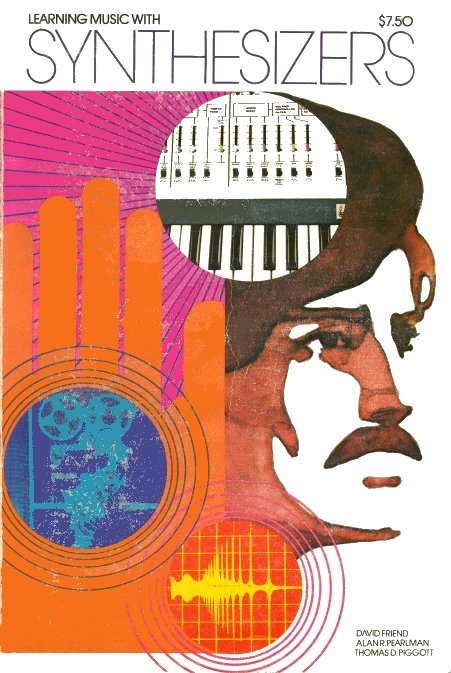
Take the first item in the order form: "Odyssey - Learning Music with Synthesizers". Over 200 pages of experiments and electronic music discussion based on the ARP Odyssey! One quick Google search and you are taken straight to the comprehensive Web site arpodyssey.com. That Web site provides images of the covers of both the first and second editions, and goes on to describe the book:
"Part I of this book is a theoretical introduction to the the science of synthesizers. Part II is a hands-on guide that walks you through principles learned in Part I on the actual ARP Odyssey. Part III gets into experimentation and studio techniques (admittedly of the 1970's).
Now I know exactly what to look for in my eBay search. :o)

Yup - the more I think about it, the more I like this ad.

Thursday, October 15, 2009

ARP 1976 family of products, Contemporary Keyboard 1976


ARP advertisement of its 1976 family of products including the ARP Odyssey, ARP Pro Soloist, ARP Axxe, ARP String Ensemble, ARP 2600, ARP Explorer, and ARP Little Brother from back inside-cover of Contemporary Keyboard Magazine March/April 1976.

Time to add another family photo to the blog!

As noted in previous blog posts, ARP used musician endorsements more than most to help sell their instruments and this ad is no exception. But they satisfied the gear-heads as well by providing a delicious family photo that included all of ARP's latest wares.

The ARP marketing team must also have known that this was a great issue of CK to showcase their whole collection, because it just happened to also include a good-sized article on one of the big-wigs of ARP - David Friend.

The article, written by Hans Klein and simply titled 'David Friend of ARP Instruments' is a great read from a historical perspective of the company. It is also a great journey into the mind of David Friend. The Article starts with a bit of Friend's history including his work towards a double major in music and engineering at Yale, and how he came to meet ARP's founder Alan R. Pearlman (ARP). As I continued to read through the article, it became clear why Friend was "credited with ARP's 'human engineering' in synthesizer design."

For example, it is obvious that Friend cared about designing synthesizers that would be easy to perform with. He knew it would take time for most of the musicians who were still used to the relatively non-expressive electric pianos and organs to become familiar with the expressive performance tools and techniques available with a synthesizer:
"The surface has barely been scratched... Since 75% of the synthesizers sold have been sold in the last three years, it's not surprising that most of the people using them today are still doing so in a fairly unsophisticated, elementary way."
Friend also had (what CK called) some 'provocative comments' about monophonic and polyphonic synthesizers and their separate uses, including:
"Polyphonic and monophonic instruments are played completely differently, and have to be used in different types of music. A melody is by its very nature generally one note at a time. People who play trumpet, saxophone, or other traditional lead-line instruments have never felt any resentment about the fact that they couldn't play a chord, because that's not what the playing of that instrument is all about. "
His recognition of musicians other than keyboardists was most likely what led Friend to try to find ways to get non-keyboard musicians interested in synthesizers:
"For many musicians, the keyboard may be their second instrument, or they may want to process their first instrument's signal through the synthesizer. I expect that as time goes on, more specialized types of synthesizers will be available, that can be played using techniques that are more familiar to people who play other instruments."
In my mind, this thinking led directly to the production of the ARP Avatar - an instrument that was developed to be used by guitar players to control a synthesizer. But the pitch-to-voltage converters weren't the greatest and the instrument didn't do well in the marketplace. According to an April 1983 Keyboard article entitled 'The Rise and Fall of ARP Instruments' by Craig Waters, Pearlman recalled later about the Avatar - "Essentially, we blew our brains out on that instrument." Ouch.

Friend's comments in the article often reached outside the world of synthesizer design. For example, he also observed how the synthesizer was going to expand upon and become an important part of the familiar 'hook' to be found at the beginning of many future hit songs:
"A skillful musician can use the synthesizer to create a musical signature for a song that makes it immediately identifiable to the listener, and that instant recognition factor seems to be one of the necessary ingredients in making a hit record."
It was Friend's ability to look at synthesizer design from a musician's point of view that helped ARP build performance-friendly instruments and this article captures this point of view perfectly.

Lastly, one more quote from the article - a single sentence by Friend that pretty much explains the current state of my bank account:
"Every keyboard player I know has more keyboards this year than he had last year, and I think that's a healthy trend that should continue."
Could he really have predicted 'gear lust'?

Monday, September 7, 2009

ARP Axxe, Contemporary Keyboard 1976


ARP Axxe synthesizer ad from inside back cover of Contemporary Keyboard magazine October 1976.

Keeping with my promise to play catch-up with ARP ads, here is another ad that featured a free ANVIL road case, this time with every ARP Axxe purchase.

The one thing I like about this ad is that it is in colour, something not that common for ARP ads in the very early years of Contemporary Keyboard. And I wouldn't be surprised if ARP decided to run this ad in colour just to showcase those multi-coloured slider caps in all their rainbow glory.

The slider caps, found on many early ARP synthesizers (and often lost during or shortly after your first gig), provided a splash of warmth and humour within an industry that at the time was still gravitating towards very scientific styles and designs.

I bought my Odyssey with over half the slider caps missing, and while doing research on picking up new caps, came upon Mark Smart's slider cap Web page. He also has another page devoted to Axxe mods (and as Mark states - he's not responsible if you mess up your synth :o)

Online references of the ARP Axxe could use some updating from Axxe enthusiasts - but the basics can be found on the usual sites. Explore Google for more.