Showing posts with label family photo. Show all posts

Tuesday, September 13, 2016

Moog "The finest new Moogs you've ever seen" family ad, Keyboard 1982


Moog "The finest new Moogs you've ever seen" black & white advertisement including Memorymoog, Taurus II and DSC (Digital Sequential Controller) from page 55 in the January 1982 issue of Keyboard Magazine.

Just in the process of filling in a few embarrassing holes in my early 80s Moog ads - and this is a big hole. 

It all started when I woke up the other morning and was reading the Synthesizer Freaks Facebook group. Someone had posted this Moog advertisement and I got excited to add my 2 cents because I recalled that it was actually the first in a pair of ads - the second "reveal" ad appearing in the following February issue. I went to the blog and found the second ad, but oddly, that post didn't reference the first ad. When I went too find this first ad it became apparent that I NEVER POSTED IT!!! What the heck?!?!

Well, fixed that! And glad I did. I enjoy this short series of ads a lot.

First, looking at the both side by side you can see they have that Wizard of Oz thing going on - first ad in black & white - second ad in colour. Like Moog has just dropped their new products onto the Wicked Witch of the West.

Next - the descriptions for the three hidden items make me drool as much now as it probably did when I read the ad the first time. Especially the low-cost pedal synthesizer with DETACHABLE electronics. Yum.

Also, the reference librarian in me likes any advertisement that specifically references other events occurring around the time the ad is published. In this case - Winter NAMM show, Booth #409, February 5-7. 

Well, happy to tie off that loose end!

Monday, April 21, 2014

Crumar "The Protagonists" family ad, International Musician and Recording World (US edition), 1978


Crumar "The Protagonists" full page colour advertisement including the Organizer-T2, Organizer-T1, Multiman-s, DS1 DIgital Synthesizer and DS2 Digital Synthesizer from page 29 in the February 1978 issue of International Musician and Recording World (US edition).

pro·tag·o·nist - noun
  • the leading character or one of the major characters in a drama, movie, novel, or other fictional text.
  • the main figure or one of the most prominent figures in a real situation.
  • an advocate or champion of a particular cause or idea.
 Well, there ya go - for all you cerebral types.  Good on Crumar not to dumb it down for a musician's magazine. :)

Over the last five and a half years that I've been blogging, I've spent exactly zero seconds talking about Crumar or their keyboards. Ziltch. Zip. Nada.  One hundred per cent of the reason has been because I've known absolutely NOTHING about them. And that's because Crumar synthesizers are very rare around these parts. Before last weekend, I had seen two in my entire life. Both DS2s. Both for only brief moments. And that was back in the early 2000s. Nothing since.

So it is with happy surprise that a DS2 just happened to come home with me last weekend. And, since they are notoriously flaky (according to Vintage Synth Explorer where they call it "a risky proposition") I'm happy to report that everything works perfectly on it. That's a photo of it right over there---->

Once I had one in my possession, I decided that I needed to do a bit of research on this beast and maybe get a little bit of history.

According to all things Wikipedia, Crumar was an Italian company, which explains why I haven't come across many of their synths in my part of the world. All the keyboards in this advertisement were first introduced in 1977 or 1978 and the DS2 was actually their first synthesizer to market. One of its main selling features was that it was one of the first synths to use digitally controlled oscillators, allowing it to stay in tune quite well - and something I noticed right away when I first turned it on and started noodling.

One of the coolest things about the DS2, in my opinion, is the amount of front panel real estate that is given to LFO control. Together it must make up about 40% of the front panel. Having two LFOs, and being able to choose which LFO controls OSC1, OSC2, VCF, VCA and pulse width - or both at the same time! - really adds another dimension to the machine.

The other crazy thing is that the DS2 also contains a basic string machine. And when I say basic - I mean basic. But it can be played at the same time as the rest of the synth, and runs through the VCF and VCA. Plus it has high and low pass filters/eq of its own. And its own LFO settings. Not too shabby.

As far as I can tell, this was one of the earliest ads for the DS2 - not just in International Musician, but in any magazine that I have in my collection. Keyboard didn't have a DS2 ad out until four months later in June 1978.

One of the first things I noticed in the ad is that the detailing of the DS2, and indeed many of the other keyboards in the ad's photo, is green. But, if you take a close look at the photo of my DS2, the detailing is in red. According to the DS2 page on Sequencer.de (underneath the photo of a green DS2), "Crumar DS-2 as green version, mornal it is red". So, apparently the red is "normal", what ever that means.

But when did the colour change?

According to Studio Dragon's user review for the DS2 on audiofanzine.com, the synth was manufactured between 1978 and 1980, and since the green version is the one in the 1978 advertisement, I'm guessing that green detailing came before red.

A Crumar DS2 auction post on MATRIXSYNTH indicates that only about 500 were made, and the serial number on my DS2 is in the 500s, so I'm guessing mine came out later on in the manufacturing run. But I can't find a date anywhere on the outside of my DS-2 - I may try and open it up later and take a look on the inside. A date may help narrow down exactly when the colour made the switch.

Well, I've only had the synth for a couple of days, but one thing I've noticed is that the beast has a nice filter, although there is a very narrow margin between not-self-oscillating and self-oscillating. But when you find that sweet spot, it has a really nice quality to it. With the help of the noise (white and pink), it makes some nice percussive sounds too.  I've already sampled it quite a few times into my Korg ESX and begun incorporating its sound into a few things I've been working on.

Not too shabby for just one long weekend of creativity.  :)

Monday, February 24, 2014

ARP family of products "Free ARP Tour Jacket" ad, Contemporary Keyboard 1980


ARP family of products including Odyssey, 2600, Pro/DGX, Quadra and Omni "Free ARP Tour Jacket" full page colour advertisement from page 43 in the June 1980 issue of Contemporary Keyboard.

Who doesn't love family photos. Especially when its old synthesizers. And in ARP's case, they coordinated their clothing in lovely Halloween colours - orange and black! Lookin' sharp, ARP! I love family photos so much I created a blog label just for 'em!

And who doesn't love the ARP logo? It's brilliant. Now, take the logo and slap it on the back of a jacket?!?!? Gah! I want! I want!  The only problem is that even if I had bought one of these keyboards back in 1980, according to the fine print in the ad I still wouldn't have got the jacket. The offer wasn't available in Canada. Booooo!

Okay, moving on before I get angry...

Ever since Korg announced the resurrection of the ARP Odyssey, I've been dreaming about it in my sleep. But its not just about the actual keyboard I'm thinking about all the time. If Korg actually has the opportunity to use the ARP brand in its promotion of the new Odyssey (and with ARP-original Dave Friend on board it is looking likely that they do), it will be interesting to see how exactly they incorporate it into the Korg brand.

Like if the Korg and ARP logos had a baby. Would you get a KoRP? Or maybe a kARP?  Point is, I'm looking forward to seeing what happens on the promotional front almost as much as I'm looking forward to getting my hands on one of the new Odysseys.  Or is that Odyssies? Odissi?  Whatever.  :)

About the ad - sadly, this is one of the last ARP ads to feature the Odyssey. Well, in Contemporary Keyboard anyways. ARP continued to run ads for other products for a while, but by the beginning of 1981 they had pretty much stopped advertising in the magazine. And the company would soon be no more.

This didn't go unnoticed in CK. A question concerning ARP was sent in to the magazine later that year, and was answered by then-assistant editor Dominic Milano on page 64 of the "Questions" section in the December 1981 issue of Keyboard. It includes some great history on what exactly happened to ARP and it's inventory.
"What has happened to ARP? Have they really gone out of business, and if so, what happens to people who need warranty work done?
ARP and Mutron have indeed gone bankrupt, but CBS Musical Instruments (they own Rhodes, Fender, and Steinway) has recently purchased the ARP 4- and 16-Voice pianos as well as the still-unreleased Chroma.  However, they did not purchase the rest of the ARP line and so do not want your calls about warranty repairs. Rumor has it that a company in Chicago was going to handle replacement parts and whatnot for defunct instruments, but that's only rumor so far. We'll print something more definite when we've found out what's really happening with warranty and other repairs. As to the availability of other ARP and Mutron products, there was an ARP inventory auction just before we went to press with this issue, and in that inventory were a number of finished products and parts which were sold to various music dealers and repair houses across the country (but centered mostly on the East Coast)."
 Now, if I was editor of Keyboard magazine, I would probably start thinking that the time might be right to get some of the history of ARP down in print. And that is exactly what Roger Powell, columnist, Utopia band member and former ARP employee did in the May 1982 issue of Keyboard in the "Practical Synthesis" section, in an article titled "ARP: The Early Years".

Roger joined the company in 1970 when there were less than twenty employees, and their only product was the ARP 2500. His job? Like in most small companies - a lot of things. Idea man, demonstrator and salesman.

There is so much history packed into this article, I can't begin to go through it all... but let me just give you a small taste. The article starts, as most historical articles do, at the beginning - when the company introduced its first product - a physical fitness training video.

Say what?
"[ARP] began its existence under the corporate name Tonus, Inc., in Newton Highlands, Massachusetts. The chief founder of the company whose musical products eventually were to bear his own initials, Alan R. Pearlman, was an avid exercise fan and chose the word 'tonus', which refers to a muscle's ideal state of fitness - strong, yet flexible enough to respond instantly - as the name of his new company."
Bring up that tidbit of knowledge the next time you are hanging around the water cooler at work tomorrow morning. *That* is how you get the ladies!

The article continues through the developmental history of the 2600 and Odyssey, with Powell adding some great commentary on his perceptions of the time period.

Referring to Moog, he writes:
"I remember the aura of stiff competition - we were always pushing ourselves to be more clever, to come up with some new twist that the other company hadn't thought of. Emulating any of the features found on the competitor's instruments was avoided at all cost. That is why you never saw a pitch-bend wheel on any ARP synthesizer. Likewise, Moog was very reluctant to switch to the temperature-controlled oscillator designs which ARP pioneered."
With the 2600, he comments that the 2600 was developed as a revolutionary suitcase-styled "mini-electronic music studio" that was quick to set up due to a new patching scheme that included "a combination of normalled, internally wired connections which could be altered by inserting patch cords to interrupt the normal connection".

On his comparison to the EMS Putney:
"It shared many features, to be exact, with the British EMS VCS-3 (a.k.a the "Putney" synthesizer, manufactured in the London suburb of the same name). However, I can report that the 2600 was the superior instrument, both in sound and general flexibility."
While Roger was out demonstrating and selling the 2600, back at the factory a stripped-down version originally called the 2700 was under development. Eventually released as the Odyssey, it had a unique sound and was the only real "threat to the well-established Minimoog".

He ends the article with a list of other influential ARP employees, including Jeremy Hill, a British engineer who was a rocket scientist (literally), and Phil Dodds, who played the 2500 in the now-famous scene from Close Encounters.

Roger ends the article with this little piece of historic brilliance:
"Certainly, the instruments will continue to be used to make wonderful music even if the company will never make new ones. If you have an old 2600 or Odyssey, it could become a collector's item some day."
He probably didn't think it would be Korg who would make a new one, eh?

Monday, February 20, 2012

Korg Wavestation A/D and SR "Five and a half amazing rack systems" ad, Keyboard and Electronic Musician 1993


Korg Wavestation A/D and SR synthesizer "Five and a half amazing rack systems" 1-page advertisement from the inside front cover of Keyboard Magazine and page 79 in Electronic Musician November 1993.

Man - is it nice out.

*And* it's a long weekend.

*AND* I have a geek date to play Legend of Drizzt.  

*AND* I'm currently building a new table-top to fit onto my studio desk. I've had one of those Quik-Lok WS500 workstation desks for quite a few years. Not the most stable workstations (people can't dance in my studio because it makes my Tannoy's and computer monitor bounce), but very useful and serves my needs.  I used a Korg Z1 as a large master controller that sat on the upper arms, and then had a small wooden board on the table portion of the desk that held a keyboard, mouse, Mackie Control, and a various midi/audio in-out devices. Needless to say, it was getting very crowded.

And now that I've recently upgraded to a laptop, I need to make room for that. So, I took out the Z1 and put the 17" laptop on the open arms. Nice fit. And my master keyboard has now become a much smaller Korg MicroKey and sits on the desk now - closer to me than the laptop keyboard. Figure I input notes a lot more than I use the laptop keyboard. We'll see.

But, that small board was now really crowded with the addition of the keyboard. So, off to the store to buy a much larger 44"x30" piece of wood. Now everything fits nicely. The less cluttered look really makes me want to be in the room and create music again.

 I'll post a pic or two on my Retro Synth Labs blog in the near future.

Anyways, point is this will be a short blog post for all the reasons above. And ptobably my next blog post too. :)

Okay... time to be honest. I'm getting waaaaay past my comfort zone as I venture more into the early-90's. And I'm not just talkin' synthesizer ads - that includes many synthesizers as well.

I found that by this time, more than a few of the big synthesizer companies were just pumping out too many of what I considered to be just derivative versions of previous synths (if I'm using the word derivative correctly?!?!). Sure they would add a few new features, more ram/voices/etc... but nothing really "new". E-mu was in full swing pumping out their Proteus series, Roland with their JVs, Yamaha with their SYs (actually, not too shabby), and of course Korg with their 0x/Ws.

Don't get me wrong - they were nice sounding machines. They were workhorses. They were powerful. But I just didn't find them fun.

Sure, there were a few interesting things popping onto the market - the Wavestation stuff, Roland JD800, E-mu Morpheus, Kurzweil K2000 and the Waldorf Wave - but they were the exceptions that proved the rule.

Luckily there was more fun to come. I just had to wait for big and small companies a-like to get their butt in gear and release things like the Korg Prophecy, Doepfer A100 gear, QuasiMidi Raveolution, and Access Virus... it would just take time.

Until then - we got this. Korg's 1993 holiday push for it's five and a half racks.

It got good play in the November and December 1993 issues of Keyboard Magazine appearing on the inside front cover, but then got kicked into the back-half of the magazine in the January and February 1994 issues when Korg decided that their new Korg X3 workstation needed inside-front-cover attention. In Electronic Musician, the "Five and a half amazing racks" ad ran for a similar length of time, but never hit cover status as far as I can tell. Boo.

At least Korg had the courage and respect (hee hee) to list the Korg A/D and SR first. Even before the newer X3R and 5R/W. Makes me happy.

Korg was using the shotgun approach this holiday season - spraying pellets of rack-goodness at all types of musicians from the professional musician with a six-figure advance to the amateur home recordists in need of an under-$1000-all-in-one-box solution. And when I say all-in-one-box, I mean it. That little 05R/W had a built-in MIDI interface for MAC and PC. Okay, maybe the synth-gear world wasn't as stagnant as I made it out to be earlier.

I'm not too sure how long the SR and A/D  remained in production after this ad was released, but the Wavestation's Wikipedia page gives the Wavestation series an end date of 1994.

Almost hurts to see the Wavestation brand end with this ad - sharing advertising with an X3R. Bah!

It's kinda like Madonna sharing a stage with Britney Spears.   :)

Thursday, April 7, 2011

Korg General Catalog, Electronic Musical Instruments, Volume 1982


Korg General Catalog, Electronic Musical Instruments, Volume 1, 1982.

This was a total surprise.

I had already pretty much finished my blog post for the Korg "...we put it all together" family of products ad from the January 1982 issue of Keyboard Magazine, when I went back to re-check something. I pulled a different copy of that January issue off the shelf, and wouldn't you know it, stapled into the centrefold of that ad was this miniature Korg catalog.

We are talking 10 juicy pages of Korg products (well, 8 pages, plus a cover and mailing label), folded down to just under 7 x 10 inches. And, unlike in the two-page ad where Korg was a little more limited by space, this catalog contains not only three pages of photos of all their current product line-up, but another three pages of all the reference info for those products - over 25 of 'em! An historical reference gold mine.

I've scanned and posted the front side of the catalog as single pages, but merged the back pages into two larger scans due to the way text and images flowed between the pages.

That front cover of the catalog is very intriguing to me. I'm always trying to figure out what the designer was thinking at the time they were creating ads and brochures - especially those with staged photos. In this case, someone decided that the front cover theme should be a humid terrarium of some sort, with the reader wiping away the droplets of water to see in to... the... er... plants and synthesizers. But wait! If the reader wiped the glass of the terrarium, that would mean it was really humid outside the terrarium. Or, maybe it was just raining outside. And the wet observer is creeping around someone's window...

Gah. Whatever. The effect is still nice. And it's always nice to stick something organic like a plant into a synthesizer ad. A nice touch.

The centrefold ad that accompanied this magazine mentions that you could send away for a full colour catalog. And since this catalog includes a mailing address page, I'm betting this was, in fact, the catalog being referred to in the ad - and included in the January issue of Keyboard as an extra. Excellent work, Korg!

Where it gets really interesting is comparing this 1982 catalog to the one Korg put out in 1984. In particular, it is interesting to see just how many products were still available. Only two new polyphonics became available in those two years - the Poly-800 and Poly-61. But in Korg's defense, they did update the Trident, as well as expand other areas of the business as can be seen in the piano/organs and rhythm/sound effects sections of that '84 catalog. Also interesting is how Korg was definitely increasing the plastic-to-wood ratio.

But the absolutely crazy-coolest thing about this catalog is the "Possible Connections" section located underneath all those lovely Korg accessories. I love diagrams, and I guess Korg was making their point: "We put it all together". And now I know my MS-20 will work with an MS-02.

And that I can plug a trumpet into an X-911. :D

Monday, December 27, 2010

Oberheim holiday-themed family of products ad, Keyboard 1985


Oberheim holiday-themed family of products advertisement from the back-inside cover of Keyboard Magazine, December 1985.

I had mentioned at the end of a recent Keyboard magazine holiday gift subscription blog post, that these season-themed ads were "few and far between". But here is one good example.

Oberheim had pretty much taken over the back-inside cover of Keyboard Magazine starting in January 1984, and kept that advertising hot-spot well into 1988. Month after month, most of those ads had a very distinctive design- and this illustrated ad definitely didn't follow that style. In fact, that is one of the reasons it stands out so well.

Flipping through the December 1985 issue of Keyboard, I soon realized that it looked like this Oberheim advertisement was the only ad that referenced the holiday season. Keyboard Magazine itself had it's usual give-the-gift-of-Keyboard subscription-type ads and forms, but no other manufacturer or service seemed to try and jump on Santa's bandwagon sleigh.

But Oberheim goes full-on, splurging on a colourful illustrated back-inside cover ad that only seemed to have been used once that year. And they do it with a bit of humor too. Under the tag-line "Sounds of the Seasons", You've got cute Santa hands playing a... er... helicopter sounds?!?!

As the kids would say - LMFAO.

And, of course, cutest of all... the modified Oberheim logo with a Santa hat in the bottom left hand corner. Now, most branding experts will try and tell you to never mess with your logo. But, usually those Branding experts are referring to a full-on long-term logo/branding change (a la GAP fiasco). Short term changes such as the one above are harmless as far as I'm concerned. Especially if done with humor. Just look at the constantly changing Google logo on it's search home page. I doubt that has hurt their brand at all. Think of Oberheim as the Google of the synthesizer world at this point. So big that they didn't even have to include photos of their products in this ad. Everyone reading Keyboard knew what a Matrix 12 looked like. :o)

And with all those great Oberheim products available during the 1985 Christmas season, this is one family that I wouldn't mind visiting with during the holidays.

Thursday, September 23, 2010

Oberheim family of products - The System, Keyboard 1983


Oberheim family of products aka 'The System', including the DX and DMX digital drum machines, DSX digital sequencer, OB-8 synthesizer and 700 professional amplifier from page 59 of Keyboard Magazine October 1983.

'The System' - sound familiar? It should.

Because Oberheim was already part of a 'The System' back in 1978, which included the 360 Systems Slavedriver and Oberheim SEM.

Then, in mid-1982, Oberheim came out with their own 'THE SYSTEM', packaging their own OB-X and OB-XA synthesizers with their DSX sequencer and DMX drum machine. Synths, drum machines, and sequencers that all worked well together through their own proprietary technology.

Jump to the beginning of 1983, and Oberheim decides to replace the aging OB-X and OB-XA synthesizers with the newly designed (internally anyways) OB-8 - advertised as having the sound of the OB-XA, but with many new features and a lower price.

Now, if you are still with me, and you have been reading the last couple of my blog posts, you know that by the beginning of 1983, the universal MIDI standard had been introduced to the masses in the form of the Prophet-600, and other companies were also on board. MIDI had the potential to allow all synthesizers, drum machines, and sequencers to work together - no matter what manufacturer they were from.

But, their was still a lot of hesitation in the industry on whether MIDI would get off the ground, and on the surface at least, it looks a lot like Oberheim, with this 1983 advertisement, was betting on that fact by reintroducing their own system of perfectly connected machines to the masses in the hopes that they could leverage their technological investment as long as possible.

So, was it as clear-cut as that? Was Oberheim protecting it's tech investment? Or did it go deeper?

An article in the June 1984 issue of Keyboard called 'Turmoil in MIDI-land' discusses a lot of the issues surround the launch, confusion, and implementation of MIDI by different manufacturers, and includes an interview with Tom Oberheim. One of the questions/answers includes mention of 'The System' and where the company stood on MIDI in the past.
"You were pegged as being very much anti-MIDI when it was first being proposed. Do you still feel that way now that you've started including MIDI on Oberheim instruments?

We made some statements early on that gave people the impression that we were anti-MIDI. That was more an opinion of individuals at Oberheim, not the attitude of Oberheim, the company. I think that MIDI will further to a great extent what we started three years ago with our system idea."
Opinions count for a lot, and I would guess that those individual's anti-MIDI opinions at the time may have helped keep steering the company towards it's own proprietary standard.

Plus, in a way, Oberheim had history on their side. In 'the good old days', keyboard players and synthesists were very brand specific. Because there wasn't a universal compatibility between those high-priced synthesizers, I'd bet Moog people tended to stick with Moogs,Oberheim people tended to stick with Oberheim, ARP with ARP, etc. There's always a good reason to think that the future will remain the same.

But, as synthesizers became more compact and price points came down, players began to build up their synth stacks with many different brands. The game started to change. Suddenly, that good ol' company strategy of a closed proprietary system to help keep your clients investing in your new products, may not look like such a great idea.

Unfortunately for those companies, a universal standard might be the only logical conclusion to come to, because as soon as two of your competitors start to share their tech, they would have a distinct marketing advantage over a company that didn't share with anyone. Better to support a universal standard than to try and go at it alone.

Plus, you have to take into account all the pressure that was probably coming from the outside world. If you look back at those Garfield ads I blogged about recently, you could say that Pia Zadora and all those other famous users listed in those advertisements were making a statement when they bought a Doctor Click. They were effectively telling all those companies that they wanted to use many different brands of sequencers, drum machines, and synthesizers. TOGETHER.

I'm not saying that Oberheim's system wasn't good. Apparently it was VERY GOOD. The fact that 'The System' continued to be advertised in Keyboard well after their own MIDI-equipped Xpander and MIDI-option for the OB-8 became available, goes to show just how powerful 'The System' probably was.

So, maybe 'anti-MIDI' goes a little too far.

'Pro-proprietary' may be a better description. :o)

Monday, September 6, 2010

Roland family of products, Keyboard 1983


Roland family of products advertisement including SH-101, JX-3P/PG-200, System-100M, MC-4/MTR-100, Jupiter-8, Juno-6/60, Jupiter-6 and MC-202 from page 14 and 15 of Keyboard Magazine July 1983.

Finally!

The Roland 'We Design The Future' tag-line had been showing up in Roland's brochures for months now, but up to this point, their advertisements were still mostly designed around it's 'Understanding Technology Series' ads like those created for the TB-303/TR-606 or Jupiter-8. Black backgrounds, strong colours, and lots of text. Their recent Juno-6 and Juno-60 ads started to mutate away from that design, but I'd still be inclined to classify them as such.

"What?" you say? Where is the tag-line? You can see it at the bottom of the ad in the purple-coloured bar. Yes, it's small. Really small. Almost an afterthought. And unfortunately, I think this is the last advertisement to use the tag-line.

Roland decided to pull in a few other common design elements found in those brochures by using a textured background and an accent piece (in this case a tile pattern background and spheres), but I have to say I miss the brochure's slick photo with mood-lighting. A really nice family photo done in that style would have looked sweeeeeet! Instead, it looks like Roland decided to comp together an image using a few effects that I would guess got onto the wish-list for Photoshop 1.0.

This advertisement was a first for Roland in one other important way too. They mention MIDI!

And so we get to the whole point of this ad. As mentioned in a recent brochure blog post for the TB-303, TR-808, TR-606 and CR-8000/5000, Roland had been pumping out A LOT of DIN-sync technology for a while now. They had a lot invested in it. And then along comes MIDI, and Roland has to convince current owners of Roland gear that the gear they just bought is not going to be obsolete in a year. And more importantly, they have to convince future owners that they are looking out for their future as well.

The ad title text handles this perfectly.
"Roland presents its product line for 1987. The nice thing is, it's available today!"
Interestingly, they make no mention of MIDI in that title or in the opening paragraph. Its not until the reader gets to the JX-3P text that MIDI is mentioned - and a definition is included next to it - "a new system of interface developed for computer-controlled instruments".

A year from now, and ALL synthesizer ads will feature the word MIDI heavily in either the title or ad-copy. I pulled out the July 1984 issue of Keyboard just in case someone called me out on that statement, and sure enough, MIDI has pretty much taken over. Heck, Roland's own ad title in the July 1984 issue was "Enter the world of MIDI".

But jump back to July 1983, when MIDI is just getting it's feet wet, and Roland is smart to stay firmly on the fence for now. By promoting both their own protocols as well as MIDI, they let readers know that no matter when they buy from Roland, the gear will be compatible one way or another.

And it wasn't just Roland that was playing the waiting game. Many companies either hadn't included MIDI in their gear yet, or if they had, they didn't say too much about it in their ads. The July 1983 ad for Garfield Electronic's Doctor Click (the godfather of sync) didn't include MIDI yet. Neither did Octave-plateau Electronic Inc.'s Voyetra-8 ad.

There was one exception... :o)

The ad for Sequential Circuit Inc.'s Prophet-600, the first commercially available MIDI synthesizer. Their ad has a large call-out box extolling the virtues of MIDI. And no wonder - SCI was heavily involved in MIDI's development. Nice!

I'll post that ad in the near future.

End note: This has always bugged me. Why did Roland pick 1987 as the 'future'? There is a design rule-of-thumb that says never to use even numbers. So maybe the thinking was that '84, '86, '88 would be out of the question. '85 is probably too close. And '89 is too close to '90.

Hmmmm... still bugging me.

Thursday, July 29, 2010

Sequential Circuits Inc. family of products, Keyboard 1982


Sequential Circuits Inc. family of products advertisement, including (clockwise) Prophet-10 synthesizer, Remote Prophet keyboard, Prophet-5 synthesizer, Poly-Sequencer, and Pro-One synthesizer, from page 50 of Keyboard Magazine February 1982.

This advertisement ran sporadically throughout 1982 starting in February. You've probably seen this ad numerous times on the Web, but I just had to post and blog about it because the ad has some absolutely great historical significance.

Not only was it one of the first ad campaigns to replace the famous Ear-Force campaign (along with the plexiglass Pro-One ad), but it was also one of the first SCI advertisement to use the new Sequential Circuits Inc logo.

Ever since I can remember coming across this logo, I had always thought the little swervy design element beside the logotype was supposed to represent recording tape. But, of course, I was wrong (again)...

The new logo was actually introduced and explained on page one of the February 1982 issue of 'The Patch' (Volume 2, Number 1) - SCI's customer magazine that included information about new products, hints and how-to's, patches, etc.
"SCI has introduced a new corporate logo designed by Greg Armbruster, Advertising Coordinator. Greg took the simple, reverse 'S' shape from the evolution of the treble clef and combined it with the existing Sequential Circuits typeface. John Mattos air brushed the design, creating a three-dimensional symbol and 'ruby' letters. Look for this new logo, which will be extensively used in all future ads and promotional campaigns!"
A treble clef! (*smacks forehead with hand*) How did I not see that? Geeez.

And even better, overly-blogged-about beloved Ear-Force ad designer John Mattos also had a hand in the design. Awesome.

If you've read past blog posts, you will know that I like researching the evolution of logos. I've blogged about SCI's early logo evolution before, and here we see more. The new logo started to appear on gear shortly after the launch - but there seemed to be a problem. Even as far as into late 1984 when SCI was about to change their logo yet again, you would see gear both in the wild and in ads that had both the new logo ('S' logo) and a version of the old logo (although, maybe technically it never was the logo without the 'inc' - but I'm going to keep calling it that). And we are talking both logos on the same piece of gear.

So, for example, all the Six-Traks I've come across have a non-treble-logo (sans inc.) on the front and a treble-logo on the back. Even when looking at Six-Traks in ads running as late as 1984.


(Photos shamefully taken from
MATRIXSYNTH's Flickr stream)

Drumtraks vary - I've seen ads from as late as 1984 with the old-style logo on the front, but my Drumtraks, and most of the ones I come across in the wild, have the new treble-logo on them. Prophet-T8's - old logo on the front, even in later ads.

I'm a big fan of consistency in branding - if you have a new logo, it should always be used. But I think I can see SCI's reasoning for continuing to use the older logo style in most cases. Aesthetics and/or real estate.

In gear that had already been designed like the Prophet-10, the front panels were really thin - so keeping the older logo makes sense. Otherwise the logotype would just appear too small. But, again, then why not include the 'inc.' as well? Consistency!

In gear designed after the new logo launched, such as the T8, the long thin wooden front panel screams for the old logo as well. In something like the Drumtraks, the front panel is a bit taller, so the treble-logo snuggles in nicely and is balanced.

So far, so good. Looks like SCI is making some good calls on when to use the old or new-style logo.

But then you look at the Prophet-600. All Prophet-600's seem to have the new logo on the front as well as the back. Finally! Consistency!

But when I look at it, that front logo just looks too small. Gah!

Maybe I'm just being nit-picky.

Probably.

Thursday, May 27, 2010

ARP family of products, Contemporary Keyboard 1976


ARP Family of Products advertisement from page 24 and 25 of Contemporary Keyboard Magazine, May/June 1976.

ARP took a very interesting approach with this two-page ad.

The two previous issues of CK included an ARP 'family' advertisement that focused squarely on ARP's road-reliability, along with a good-sized helping of classic name-dropping.

Then they come out with this advertisement. Although it starts off with another big dollop of name-dropping, it soon takes a totally different sales approach than the previous ad.

ARP first points out a few facts about performance and quality. Never one to pull a punch, they take direct aim at Moog with the ever-popular slider-vs-rotary argument:
"ARP slide controls outperform hard-to-read rotary knobs".
(Moog's response: "Just try to accurately tune an all-slider instrument!")

ARP continues the attack on many of their competitors with:
"We build ARPs with expensive, industrial-grade circuitry. You won't find any chrome-plated plastic or paper based circuit boards inside an ARP."
Kapow!

With the bad-cop routine over with, ARP then goes into the soft-sell approach by providing a few educational facts, letting you know how easy it is to learn to play an ARP synthesizer and how you can grow your studio by 'adding-on, not trading in'.

And then. Finally... they hit you with the real pitch.

Buy our manuals for only a couple of bucks and see for yourself.

Like I said - it is an interesting approach and a common sales technique I've seen used in stores and at trade shows. Always try and put whatever you are selling into the hands of a potential buyer. And if you can't get the real thing in their hands, get the info into their hands.

In this case, ARP is enticing readers to buy an ARP manual BEFORE buying a synthesizer. Let's get this straight... they aren't asking you to send in for a free brochure with a bit of promotional material - they are actually getting readers to spend real cash on a manual. And once a reader has an ARP manual in their hands, it will be much easier to convince that reader to buy an ARP synthesizer.

I've bought enough synthesizers in my lifetime to know that I can justify a purchase if I've convinced myself I've done the research. And if I've spent money on that research, I can now convince myself to call that research an 'investment'. :o)

Smart thinking on ARP's part. And even smarter to sell 'learning synthesis' books that focus on their synthesizers. The more I think about it, the more I like this ad.

But you know what I like most about this advertisement?

It's like my own personal checklist of ARP stuff. Seriously - if you are into ARP paraphernalia like I am, this ad pretty much spells out some, if not most, of the great stuff that was available from ARP at the time. Even better is that the list in the advertisement is a great starting point for online searches for more information.

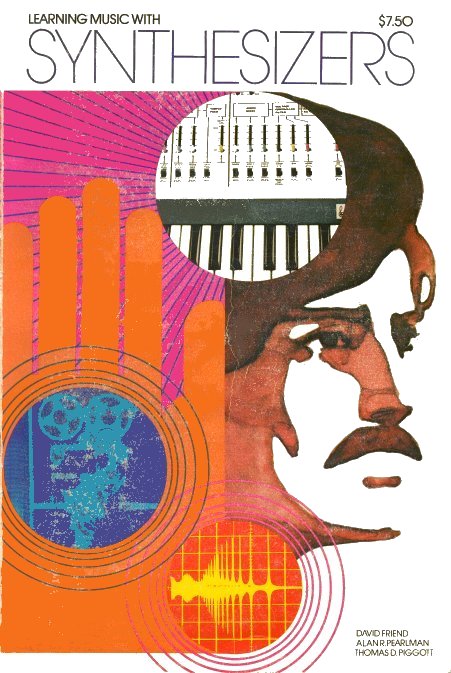
Take the first item in the order form: "Odyssey - Learning Music with Synthesizers". Over 200 pages of experiments and electronic music discussion based on the ARP Odyssey! One quick Google search and you are taken straight to the comprehensive Web site arpodyssey.com. That Web site provides images of the covers of both the first and second editions, and goes on to describe the book:
"Part I of this book is a theoretical introduction to the the science of synthesizers. Part II is a hands-on guide that walks you through principles learned in Part I on the actual ARP Odyssey. Part III gets into experimentation and studio techniques (admittedly of the 1970's).
Now I know exactly what to look for in my eBay search. :o)

Yup - the more I think about it, the more I like this ad.

Thursday, October 15, 2009

ARP 1976 family of products, Contemporary Keyboard 1976


ARP advertisement of its 1976 family of products including the ARP Odyssey, ARP Pro Soloist, ARP Axxe, ARP String Ensemble, ARP 2600, ARP Explorer, and ARP Little Brother from back inside-cover of Contemporary Keyboard Magazine March/April 1976.

Time to add another family photo to the blog!

As noted in previous blog posts, ARP used musician endorsements more than most to help sell their instruments and this ad is no exception. But they satisfied the gear-heads as well by providing a delicious family photo that included all of ARP's latest wares.

The ARP marketing team must also have known that this was a great issue of CK to showcase their whole collection, because it just happened to also include a good-sized article on one of the big-wigs of ARP - David Friend.

The article, written by Hans Klein and simply titled 'David Friend of ARP Instruments' is a great read from a historical perspective of the company. It is also a great journey into the mind of David Friend. The Article starts with a bit of Friend's history including his work towards a double major in music and engineering at Yale, and how he came to meet ARP's founder Alan R. Pearlman (ARP). As I continued to read through the article, it became clear why Friend was "credited with ARP's 'human engineering' in synthesizer design."

For example, it is obvious that Friend cared about designing synthesizers that would be easy to perform with. He knew it would take time for most of the musicians who were still used to the relatively non-expressive electric pianos and organs to become familiar with the expressive performance tools and techniques available with a synthesizer:
"The surface has barely been scratched... Since 75% of the synthesizers sold have been sold in the last three years, it's not surprising that most of the people using them today are still doing so in a fairly unsophisticated, elementary way."
Friend also had (what CK called) some 'provocative comments' about monophonic and polyphonic synthesizers and their separate uses, including:
"Polyphonic and monophonic instruments are played completely differently, and have to be used in different types of music. A melody is by its very nature generally one note at a time. People who play trumpet, saxophone, or other traditional lead-line instruments have never felt any resentment about the fact that they couldn't play a chord, because that's not what the playing of that instrument is all about. "
His recognition of musicians other than keyboardists was most likely what led Friend to try to find ways to get non-keyboard musicians interested in synthesizers:
"For many musicians, the keyboard may be their second instrument, or they may want to process their first instrument's signal through the synthesizer. I expect that as time goes on, more specialized types of synthesizers will be available, that can be played using techniques that are more familiar to people who play other instruments."
In my mind, this thinking led directly to the production of the ARP Avatar - an instrument that was developed to be used by guitar players to control a synthesizer. But the pitch-to-voltage converters weren't the greatest and the instrument didn't do well in the marketplace. According to an April 1983 Keyboard article entitled 'The Rise and Fall of ARP Instruments' by Craig Waters, Pearlman recalled later about the Avatar - "Essentially, we blew our brains out on that instrument." Ouch.

Friend's comments in the article often reached outside the world of synthesizer design. For example, he also observed how the synthesizer was going to expand upon and become an important part of the familiar 'hook' to be found at the beginning of many future hit songs:
"A skillful musician can use the synthesizer to create a musical signature for a song that makes it immediately identifiable to the listener, and that instant recognition factor seems to be one of the necessary ingredients in making a hit record."
It was Friend's ability to look at synthesizer design from a musician's point of view that helped ARP build performance-friendly instruments and this article captures this point of view perfectly.

Lastly, one more quote from the article - a single sentence by Friend that pretty much explains the current state of my bank account:
"Every keyboard player I know has more keyboards this year than he had last year, and I think that's a healthy trend that should continue."
Could he really have predicted 'gear lust'?

Thursday, September 10, 2009

Oberheim 1976 family of products, Contemporary Keyboard 1976


Oberheim advertisement of its family of products including Oberheim Eight Voice, Four Voice, Two Voice and Expander Module synthesizers, and Mini-Sequencer and 144 Note Digital Sequencer from page 9 of Contemporary Keyboard magazine August 1976.

Oh, hello. Did I just walk in on an Oberheim family photo shoot? I think I'm dreaming.

This Oberheim advertisement is fabulous for a number of reasons.
  1. It contains photos of numerous Oberheim gear from 1976.
  2. It has historical value because it tells us when Oberheim started shipping gear - November 1975.
  3. It name drops more famous musicians than your average ARP ad (although a future ARP blog post will show that Alan R. Pearlman is still the king...)
  4. Did I mention all the gear?
Oberheim did another family photo a decade later - I still like to flip back and forth between the two ads to see just how far things have come in ten years. And I think it even beats Roland's family photo ad from 1978.

While doing some research for this post, I Googled 'oberheim history' and came across this 2008 Tom Oberheim interview on Synthopia that is over two and a half hours long. I'm afraid I never got any further in my research. :o)

Monday, July 13, 2009

Thursday, June 4, 2009

Oberheim family of products, Keyboard 1986


Oberheim family of products, including Matrix-12 synthesizer, DMX-MIDI, DX-Stretch, Matrix-6 synthesizer, Prommer, Xpander synthesizer, XK, and Matrix6R synthesizer from back cover of Keyboard magazine March 1986.

Monday, March 23, 2009

Monday, March 9, 2009